
Best Kitchen-aid range hood brush-less blower ac dc fan motor cost
Description:
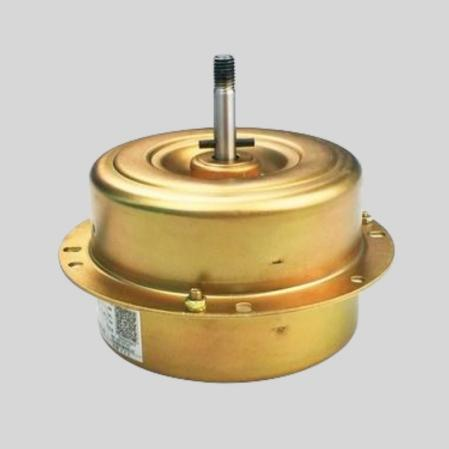
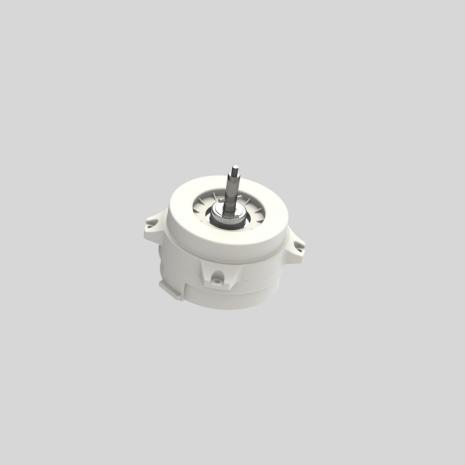
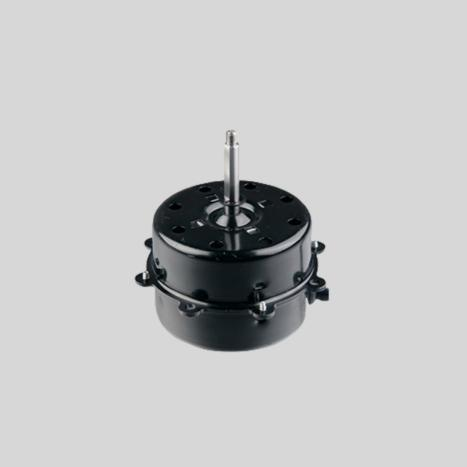
The motor is the core component driving the centrifugal fan of the range hood, which is related to the operating efficiency and power of the entire range hood.
The motor converts electrical energy into mechanical kinetic energy, driving the centrifugal fan wheel to rotate at high speed, generating negative pressure and inducing oil fumes to enter the equipment. After filtration, the exhaust gas is discharged. The speed of the motor determines the amount of negative pressure it generates, and the air volume is one of the main indicators that affect the effectiveness of oil fume extraction. The motor adopts a multipole asynchronous motor structure, combined with variable frequency control technology, to achieve stepless speed adjustment, with a regulation range typically between 1000 to 4000 revolutions per minute. In addition, the external part of the motor is equipped with a fan, which is mainly used to prevent the motor from overheating and provide stable airflow for the wind turbine.
The working principle of the best Kitchen-aid range hood brush-less blower ac dc fan motor is as follows:
1. Oil fume inhalation. By rotating the range hood motor at high speed, the impeller is driven to rotate at the same time, forming a negative pressure at the air inlet, thereby sucking the oil smoke gas into the interior of the body.
2. Oil fume separation. The separation of oil fumes can be divided into two processes. Firstly, when the oil smoke gas is sucked into the body, it will first pass through a layer of filter screen, and the large particles of oil stains will be filtered out by this layer of filter screen. Later, the oil stains will also flow into the oil cup along the filter. Secondly, after the small particles of oil pass through the filter, under the high-speed rotation of the impeller, they will be thrown onto the separation plates on both sides due to centrifugal force, and will slowly flow into the oil cup.
3. Discharge the remaining gas. This is the final step, and the gas separated by the oil smoke will be discharged through the check valve and smoke exhaust pipe.
Details:
 |
 |
 |
Products categories
-
Brushless Direct Current Motor
-
Compact High-Efficiency Micro Motor for Robotics
-

Customized mini linear actuator/small linear actuator
-

whirlpool dishwasher hood fan assisted dry
-
AC/DC shaded pole asynchronous induction motor and fan
-
AC Fan Motor, 220V/12V/5V Options, High Efficiency
-
Best small 12V/24V DC electric motor fan price
-
4.12V/110V best small electric oven heating heater fan motor
-
5V/9V kitchen Electric oven exhaust cooling fan motor
-
Brushless DC/AC Blower Fan for Steaming and Baking Ovens, 220V/50W
-
AC/DC Boiler Fan Motor for Steam Oven
-
Shaded-Pole Induction Motor | Compact AC Motor for Appliances
-
Best Kitchen-aid range hood brush-less blower ac dc fan motor cost
-
BLDC Washing Machine Motor | High Efficiency & OEM Ready
-
Mini small motor for food processing machine
-
Fully automatic three phase AC variable frequency drum motor
-
DC Variable-Frequency Drum Motor for Washing Machine
-
High Torque AC Motor for Drum Washing Machines
-
DC air conditioning fan condenser motor
-
AC air conditioner motor
-
High Temperature Convection Oven Fan Motor
-
AC/DC Tubular Motor for Awning & Roller Shutter OEM Manufacturer
-
Mini Brushless AC/DC Dryer Motor Manufacture
-
Small mini electric DC /BLDC Fan motor price
-
Mini High Torque Single Phase AC Motor Manufacturer
-
High RPM Miniature BLDC Motors (12V-72V)
 Privacy settings