
Introduction to AC Fans
AC fans, or alternating current fans, are a critical component in various industrial and domestic systems, providing efficient cooling and ventilation solutions. Characterized by their reliance on alternating electrical currents, AC fans differ fundamentally from their DC (direct current) counterparts. This article delves into the specifics of AC fans, contrasting them with DC fans, and exploring their construction, benefits, applications, and latest technological trends. We also touch upon key factors to consider when sourcing these fans from wholesale suppliers and manufacturers.
How AC Fans Work
● Explanation of Alternating Current
At the heart of AC fans is alternating current, which periodically reverses direction, unlike direct current that flows unidirectionally. This oscillation is typically sinusoidal, meaning it varies smoothly, providing a consistent flow that powers the motor within the fan. AC electricity is the standard for transmission over long distances due to its efficiency and reduced power loss, making AC fans a staple in both industrial and residential settings.
● Mechanism of AC Fans
The operation of an AC fan involves converting electrical energy into mechanical energy, resulting in the rotation of fan blades. This process begins with AC power energizing the fan's motor windings, creating a magnetic field that induces rotor motion. This rotor, connected to the fan blades, spins at a speed determined by the frequency and voltage of the supplied AC power, thus generating airflow.
Components of AC Fans
● Key Parts and Their Functions
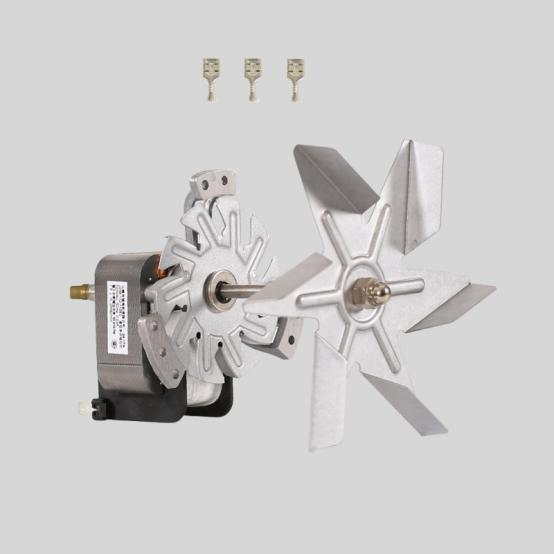
AC fans consist of several critical components, including the stator, rotor, bearings, fan blades, and housing.
- Stator : The stationary part of the motor containing coils that produce a magnetic field when energized.
- Rotor : The rotating element that turns the fan blades, working in conjunction with the stator's magnetic field.
- Bearings : Facilitate smooth rotation of the rotor, minimizing friction and wear.
- Fan Blades : The air-moving elements, designed for optimal airflow and pressure.
- Housing : Encloses and protects the internal components, providing structural stability.
● Importance of Each Component
Each component plays a pivotal role in ensuring the fan operates efficiently. The stator and rotor are integral to the motor's operation, while bearings reduce friction and extend the fan’s lifespan. Well-designed fan blades maximize airflow, enhancing the fan’s cooling capability. The housing not only protects internal parts but also directs airflow and reduces noise.
Types of AC Fans
● Different Designs and Applications
AC fans come in various designs to suit different applications, each optimized for specific operational conditions. Common types include:
- Axial Fans : Ideal for high airflow at low pressures, typically used in ventilation systems and electronic cooling.
- Centrifugal Fans : Known for high pressure and variable airflow, often employed in HVAC systems and industrial processes.
- Crossflow Fans : Provide uniform airflow across their length, useful in air curtain applications and electronics cooling.
● Specific Use Cases for Each Type
Axial fans are preferred for general ventilation and large-scale cooling applications due to their capability to move large volumes of air. Centrifugal fans are more suited for situations requiring substantial airflow against resistance, such as ducted ventilation systems. Crossflow fans excel in applications needing consistent airflow across wide areas.
Advantages of Using AC Fans
● Energy Efficiency and Cost Effectiveness
AC fans offer several advantages that make them a popular choice in many applications. Their design allows for continuous, uninterrupted airflow, which is crucial for systems requiring stable operational conditions. Though traditionally more power-intensive than DC fans, advances in motor technology have made AC fans more energy-efficient, reducing operational costs.
● Long-term Reliability and Performance
AC fans are robust and durable, often with fewer moving parts and maintenance requirements than DC fans. Their straightforward construction translates into long-term reliability, making them suitable for demanding industrial environments. Additionally, their ability to operate directly from AC power sources simplifies their installation and integration into existing systems.
Limitations of AC Fans
● Potential Drawbacks and Challenges
Despite their benefits, AC fans also have certain limitations. Their reliance on AC power means they can be less efficient in applications where DC power is readily available. Additionally, their speed is fixed to the supply frequency, which can be a limitation for variable speed applications without additional controllers.
● Situations Where AC Fans May Not Be Ideal
In battery-powered or energy-sensitive applications, DC fans might be preferred due to their lower power consumption and flexibility in speed control. Moreover, environments requiring precise airflow adjustments often benefit from the dynamic capabilities of DC fans.
Applications of AC Fans
● Common Industries and Settings
AC fans are ubiquitous across various industries, providing essential cooling and ventilation. They are critical in HVAC systems, maintaining comfortable indoor climates in buildings, and play vital roles in cooling electronic equipment, preventing overheating and ensuring operational stability.
● Role in HVAC Systems
In HVAC systems, AC fans help regulate temperature by ensuring constant air circulation, removing excess heat, and distributing cooled or heated air evenly. They contribute to energy savings and improved air quality, enhancing the overall efficiency of heating and cooling systems.
Maintenance of AC Fans
● Tips for Regular Upkeep
To ensure peak performance and longevity, regular maintenance of AC fans is essential. This includes cleaning fan blades and housings to prevent dust buildup, lubricating bearings to reduce friction, and inspecting electrical connections for wear or damage.
● Importance of Professional Servicing
While routine maintenance can be performed in-house, professional servicing is recommended for thorough inspections and repairs. This ensures any underlying issues are addressed promptly, preventing costly downtimes and extending the lifespan of the fans.
Safety Considerations for AC Fans
● Potential Hazards and Precautions
Operating AC fans involves certain safety considerations. Potential hazards include electrical shocks, mechanical injuries from moving parts, and overheating. To mitigate these risks, it’s vital to adhere to operational guidelines, regularly inspect equipment, and implement appropriate safety measures.
● Guidelines for Safe Operation
Users should ensure fans are installed correctly and securely mounted, with proper electrical connections and insulation. Access to fan blades should be restricted, and safety guards employed where necessary. Regular checks and compliance with manufacturer recommendations are essential for safe operation.
Future Trends in AC Fan Technology
● Innovations and Technological Advancements
The future of AC fans looks promising, with ongoing innovations aimed at improving energy efficiency and operational flexibility. Advances in motor design, such as electronically commutated motors, offer enhanced control over fan speed and power consumption, bridging the gap between traditional AC and DC systems.
● Impact on Energy Consumption and Design
Emerging technologies are likely to make AC fans even more efficient, reducing their energy footprint and operational costs. These advancements will also influence fan design, leading to more compact, quieter, and adaptable solutions suitable for a broader range of applications.
Conclusion
Understanding the essentials of AC fans allows industries and consumers to make informed decisions when selecting cooling and ventilation solutions. By balancing the benefits and limitations of AC fans against specific application needs, users can optimize performance and efficiency in their systems.
● Maxtech: A Leading AC Fan Manufacturer
Maxtech, based in Hangzhou near the Hangzhou Xiaoshan Airport, is a premier manufacturer specializing in the research, development, and production of micro and special motors, including a broad range of fan products. From AC fans to high-speed DC variable frequency motors, Maxtech’s offerings are widely utilized across household appliances and industrial equipment, standing out for their quality and innovation.
Post time: 2024-10-30 14:53:02
 Privacy settings