
Introduction to Brushless DC Motors
brushless direct current (BLDC) motors have become increasingly popular in various applications due to their high efficiency, excellent controllability, and long lifespan. Unlike their brushed counterparts, BLDC motors do not require brushes for commutation, which significantly reduces maintenance needs and extends operational life. This article delves into the fundamentals of BLDC motors, exploring their components, operation, benefits, applications, and future prospects.
Principle of Operation
● How BLDC Motors Convert Electrical to Mechanical Energy
At the core of every BLDC motor lies a simple yet efficient mechanism to convert electrical energy into mechanical energy. The key elements are the stator—comprised of fixed coils—and the rotor, which is a permanent magnet. When current flows through the coils, it creates a magnetic field that interacts with the permanent magnets on the rotor, causing it to spin. This principle eliminates the need for brushes and commutators, making BLDC motors more reliable and efficient.
● Role of Permanent Magnets and Stators
In BLDC motors, the rotor's permanent magnets create a persistent magnetic field. The stator, which remains stationary, has coils that are sequentially energized to produce a rotating magnetic field. As the magnetic fields interact, the rotor spins, converting electrical signals into mechanical movement. This setup not only boosts efficiency but also reduces the wear and tear typically associated with brushed motors.
Components and Design of BLDC Motors
● Description of Key Components
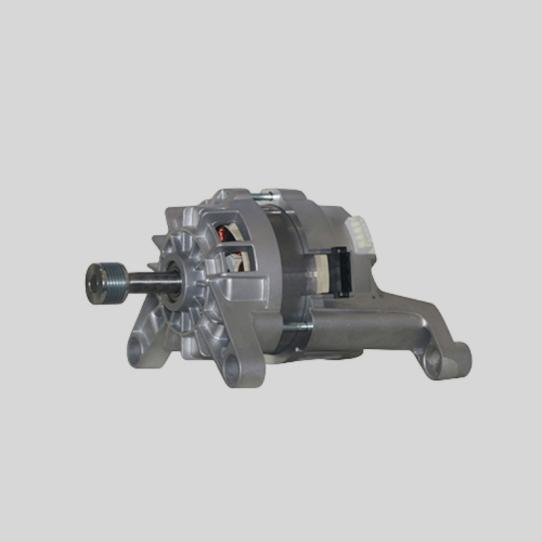
BLDC motors consist of several essential parts, including the stator, rotor, and electronic controller. The stator is made up of multiple coils fixed in place, while the rotor consists of permanent magnets. The electronic controller manages the current flowing through the stator coils, ensuring the rotor spins correctly. This design minimizes friction and mechanical wear, offering longer operational life and reduced maintenance.
● Differences from Brushed DC Motors
The primary distinction between BLDC and brushed DC motors lies in the absence of brushes and a commutator in BLDC designs. Brushed motors use brushes to deliver current to the rotating commutator, generating mechanical wear and sparks. On the other hand, BLDC motors rely on electronic commutation, which energizes the coils in a specific sequence to achieve rotation. This fundamental difference contributes to the superior durability and efficiency of BLDC motors.
Advantages of BLDC Motors
● High Efficiency and Torque
One of the most significant advantages of BLDC motors is their high efficiency. These motors can maintain maximum torque continuously, unlike brushed motors that only achieve peak torque at specific points in their rotation. This constant performance makes BLDC motors ideal for applications requiring stable and efficient operation, such as electric vehicles and industrial machinery.
● Reduced Maintenance and Longer Lifespan
The lack of brushes and commutators in BLDC motors means there are fewer components subject to wear and tear. This translates to lower maintenance requirements and a longer operational lifespan. The absence of mechanical friction also reduces the risk of sparks, making BLDC motors safer and more reliable in various applications, from household appliances to industrial equipment.
Control Mechanisms of BLDC Motors
● How Current is Managed in BLDC Motors
In BLDC motors, current management is crucial for efficient operation. The electronic controller plays a vital role by adjusting the current flow through the stator coils. By varying the magnitude and direction of the current, the controller ensures that the rotor spins at the desired speed and torque. This precise control allows BLDC motors to deliver consistent performance across various applications.
● Importance of Feedback Systems
Feedback mechanisms are integral to the operation of BLDC motors. Sensors such as Hall-effect sensors or encoders monitor the rotor's position, providing real-time data to the electronic controller. This information enables the controller to adjust the current flow accurately, ensuring optimal performance. Effective feedback systems enhance the motor's efficiency, extend battery life in portable applications, and reduce energy consumption.
Applications in Consumer Electronics
● Use in Household Appliances like Washing Machines and Air Conditioners
BLDC motors have become a staple in household appliances due to their efficiency and reliability. Washing machines and air conditioners benefit from the motor's ability to deliver consistent torque and speed, resulting in better performance and energy savings. The reduced maintenance needs also make BLDC motors an attractive choice for these applications, contributing to a longer appliance lifespan.
● Emerging Use in Fans and Vacuum Cleaners
The high efficiency and low noise generated by BLDC motors have made them popular in fans and vacuum cleaners. In fans, BLDC motors contribute to a significant reduction in power consumption, making them more energy-efficient and eco-friendly. Similarly, vacuum cleaners equipped with BLDC motors offer superior suction power and quieter operation, enhancing the user experience.
Challenges and Solutions in BLDC Motor Usage
● Addressing Heat Generation and Energy Consumption
While BLDC motors are highly efficient, they can generate heat during prolonged operation. Effective thermal management solutions, such as heat sinks and cooling systems, are essential to maintain optimal performance. Additionally, advancements in motor design and materials can further reduce energy consumption and heat generation, enhancing the motor's overall efficiency.
● Overcoming Control Complexity
The electronic control systems required for BLDC motors can be complex, posing a challenge in some applications. However, advancements in microcontrollers and software algorithms are making it easier to implement and manage these control systems. Robust design and thorough testing can ensure that the control mechanisms function correctly, delivering the desired performance without compromising reliability.
Conclusion and Summary
BLDC motors represent a significant advancement in motor technology, offering high efficiency, precise control, and long operational life. Their lack of brushes and commutators reduces maintenance needs and enhances reliability, making them ideal for various applications, from consumer electronics to industrial machinery and electric vehicles. As technology continues to evolve, the potential for BLDC motors will only grow, paving the way for more innovative solutions in the future.
About MAXTECH
MAXTECH is a leading brushless direct current manufacturer, specializing in high-quality BLDC motors for a wide range of applications. As a top brushless direct current factory and wholesale brushless direct current supplier, MAXTECH is committed to delivering innovative and reliable motor solutions to meet the diverse needs of its customers. With a strong focus on quality and customer satisfaction, MAXTECH continues to set new standards in the industry.
Post time: 2024-07-19 14:34:15
 Privacy settings